
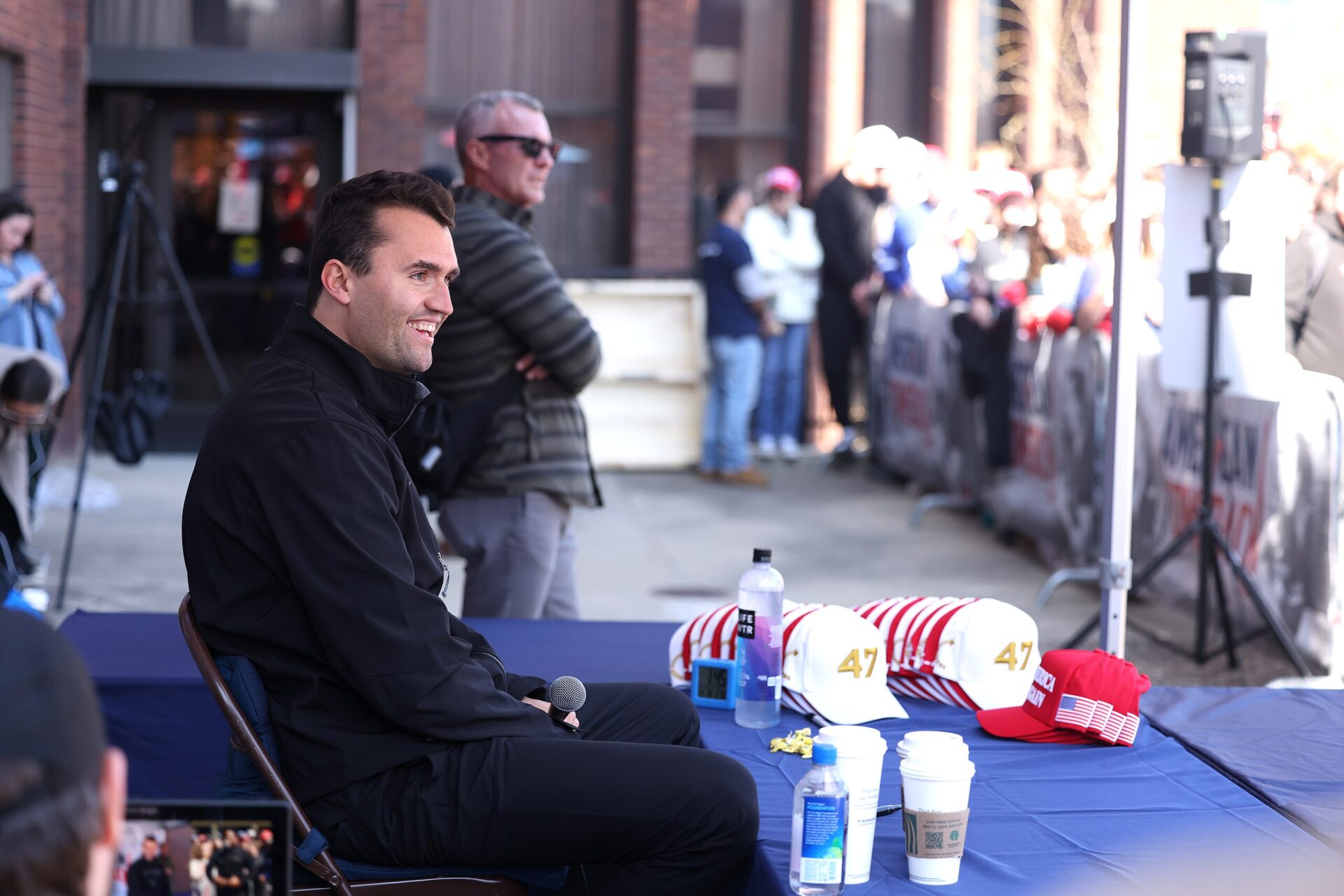
Charlie Kirk’s Sacrifice: A Turning Point
By Katie Cook, Policy Research Assistant at Independent Women’s Forum

The tragic assassination of Charlie Kirk has sent shockwaves through the political and cultural landscape, leaving many grappling with grief and anger—but also filled with a renewed sense of purpose. As someone who has worked in the political arena for nearly seven years, I feel this loss deeply—not just for Kirk’s contributions but for the shared kinship among those of us who have fought for change in a deeply divided world.
Kirk, who was only a year-and-a-half older than me, was a bold and unashamed voice for his faith and convictions. His death is not just a personal tragedy for those who knew him but a stark reminder of the escalating vitriol in our society. As a conservative, I’ve always welcomed policy disagreements, but the hate and violence directed at those with differing views—evidenced by the celebration of Kirk’s death in some circles—crosses a dangerous line. It’s a wake-up call for all of us to reject the evil of dehumanizing our opponents.
A Dangerous Divide
While many across the political spectrum have condemned Kirk’s killing and political violence more broadly, troublingly, some have justified and even celebrated this tragic event. Figures like Sen. John Fetterman and the late Georgia politician Zell Miller show that principled disagreement is possible. Yet celebrating violence against those you disagree with is not just wrong—it’s evil.
If you cheer Kirk’s death, you’re not just opposing his ideas; you’re endorsing a worldview that sees people like me, my family, and my friends as expendable all for having conservative views. That’s a line we cannot cross as a nation. To paraphrase a Facebook post where a friend of a friend, Nick Argyle, poignantly noted that equating the outrage over Kirk’s assassination with tragedies like school shootings misses a crucial distinction: no one praises school shooters or claims their victims deserved it, yet a not-insignificant portion of our population is cheering Kirk’s death as an act of violent terrorism. This isn’t just about empathy—it’s about confronting a chilling endorsement of targeted violence.
A Personal Reflection
This moment hits close to home. Those my age in this field have come up through the ranks with the likes of Charlie Kirk. Truthfully, what happened to Charlie could have happened to any one of us. As a wife, I think of my husband, who is just a few months older than Kirk, and the fear of losing him to such senseless violence is overwhelming. As someone who met Kirk briefly and worked alongside others in his circle, I’m heartbroken. We didn’t enter politics for fame or careerism; we entered it because we wanted to make our corner of the world better. Kirk embodied that mission, leaving everything on the field with unwavering courage. I have been harassed for my political beliefs both publicly and privately. Those experiences pale in comparison to what Kirk endured, but they give me perspective. Many of us in this fight have faced harassment and threats. Yet, Kirk’s death underscores a chilling reality: the rhetoric of division has turned deadly.
A Legacy of Courage
Kirk’s life was a testament to standing firm in one’s beliefs, even when it’s unpopular. At my grandfather’s funeral two years ago, our pastor said that my grandfather “stood on what he believed. It may not have been popular, but he was right.” Those words could just as easily describe Charlie Kirk. He lived boldly, unashamed of his faith, and died knowing he had fought for what he believed.
Some have expressed discomfort with labeling Kirk a “hero of the faith” or a “martyr,” terms that recognize exceptional perseverance, trust, and obedience in God or their beliefs and sacrificing oneself. At first, I shared that unease—not because I thought the labels were untrue, but because they carry a heavy weight. My generation hasn’t seen a martyr our age, someone who boldly stood for their beliefs and was willing to die for them. Kirk exemplified this, stating he hoped to be remembered for “courage of [his] faith.” His political involvement was rooted in his desire to make his country better for those around him and future generations, all driven by his faith. It’s sobering to recognize that what made him a martyr wasn’t just his politics but the convictions that fueled them.
This weekend, meeting a woman wearing a “Freedom — Charlie Kirk” shirt brought this home. We both choked up, reflecting on how Kirk’s death feels different—how it marks him as a martyr for his faith in a generation that rarely witnesses such conviction, especially in someone their own age. She admitted that watching Kirk’s example made her question her own wavering faith. I confessed I’ve had those moments too. But Kirk’s legacy challenges us all to be unashamed, to stand firm, and to live with the kind of courage he exemplified.
A Call to Action
As Glenn Beck noted on the Megyn Kelly show, this tragedy could spark something glorious—a movement rooted in hope, faith, and conviction. Church comes from the Greek word, ekklesia, which means, “congregation”, “assembly”, or “gathering.” Fittingly, Kirk’s name means “church” in Gaelic. His life—and not just in the religious sense—was a living testimony to that meaning. His death should galvanize us to reject division, to stand boldly for what we believe, and to work toward a society where disagreement doesn’t lead to violence.
This moment has changed me, as it has countless others. The grief and anger are real, but so is the resolve to carry forward Kirk’s mission. Let’s honor his memory by being unashamed in our faith and convictions, by fostering dialogue over destruction, and by striving to make our world better—not through hate, but through courage and love.

Just to clarify – are you suggesting Kirk sacrificed his life?