
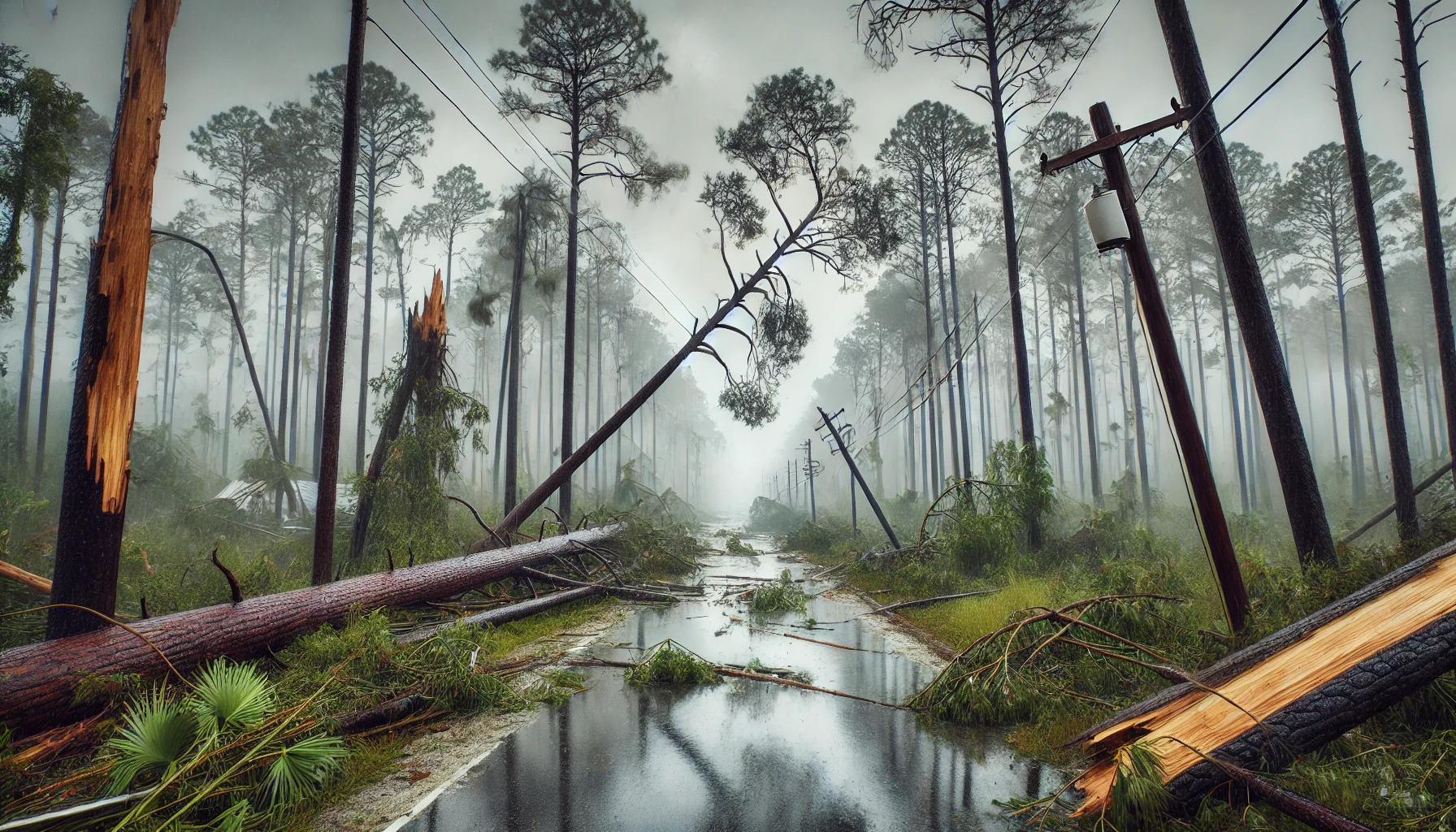
Helene, Mill Closures, and a Changing Market Hammer Georgia’s Timber Industry
While at a meeting of policy peers, we put into practice an AI prompt engineering exercise. I choose as the subject of my new and improved prompting skills the state of Georgia’s timber industry. I had started reading this article on the struggles of the industry, but hadn’t had time to finish it or explore the issue further. ChatGPT gave me an enormous amount of information and policy recommendations the Legislature and those in the industry might consider. Then, following my instructions, it produced the following blog post. Enjoy. I hope it adds positively to the discussion.
Georgia’s Timber Industry at a Crossroads: Three Policy Steps to Secure Its Future
Georgia’s forests have long been one of the state’s greatest assets—an economic powerhouse that sustains more than 140,000 jobs and contributes billions to rural communities. Yet the state’s timber industry faces one of its most serious challenges in decades. Recent storms, mill closures, and changing global markets have converged to create what some foresters call a “perfect storm.”
Hurricane Helene, which tore through Georgia in 2024, left a trail of devastation across nearly nine million acres of timberland. Early estimates from the Georgia Forestry Commission put losses at over $1.2 billion. Fallen trees now litter the landscape, creating wildfire hazards and leaving landowners struggling to recover. Meanwhile, several major pulp and paper mills—including plants in Savannah, Riceboro, and Cedar Springs—have closed, erasing more than 1,000 jobs and removing critical buyers of Georgia wood. Add to that the global shift toward recycled fiber and away from virgin pulp, and the result is a sharp decline in demand that ripples through every part of the forest economy.
Despite these setbacks, Georgia’s forestry sector remains strong at its core. The state’s fast-growing pine, robust infrastructure, and skilled workforce mean that with the right policy choices, Georgia can turn this crisis into opportunity. Here are three key actions lawmakers should consider:
1. Accelerate Forest Recovery Through Targeted Tax Relief and Replanting Support
Landowners hit by Helene need help clearing debris, salvaging timber, and replanting for the next generation. Georgia already suspended its harvest tax in storm-affected counties—a good start—but the program should be expanded and extended. Legislators could provide direct tax credits for replanting and site preparation, and offer cost-share assistance for rebuilding access roads and removing downed timber. These measures would not only restore damaged forests faster but also help stabilize rural economies reliant on forestry income.
2. Invest in New Forest-Product Manufacturing and Innovation
Georgia’s long-term challenge is not just cleaning up after Helene—it’s rebuilding the market for its wood. With pulp and paper demand shrinking, the state must attract next-generation wood industries such as mass-timber construction, biofuels, and bioplastics. Lawmakers should create a state “Forest Innovation Fund” offering targeted tax incentives and infrastructure grants for companies investing in new mills or retrofitting old ones. Public-private partnerships with universities and the Georgia Center of Innovation could accelerate research on bio-based materials, helping Georgia stay ahead of global competitors.
3. Lead by Example: Use Georgia Timber in Public Construction
To jump-start demand, the state can put its own buying power to work. Georgia should follow other states in requiring that engineered wood—like cross-laminated timber—be considered or preferred in new state buildings, schools, and university facilities. This policy would directly support Georgia landowners and mills while showcasing sustainable, home-grown materials that store carbon and strengthen rural economies.
Georgia’s forests are resilient. With smart policies that help landowners recover, attract innovative manufacturing, and create local demand, the state can ensure its timber industry not only survives this moment but thrives for decades to come. The trees that will be harvested in 2050 are being planted today—so the time to act is now
