
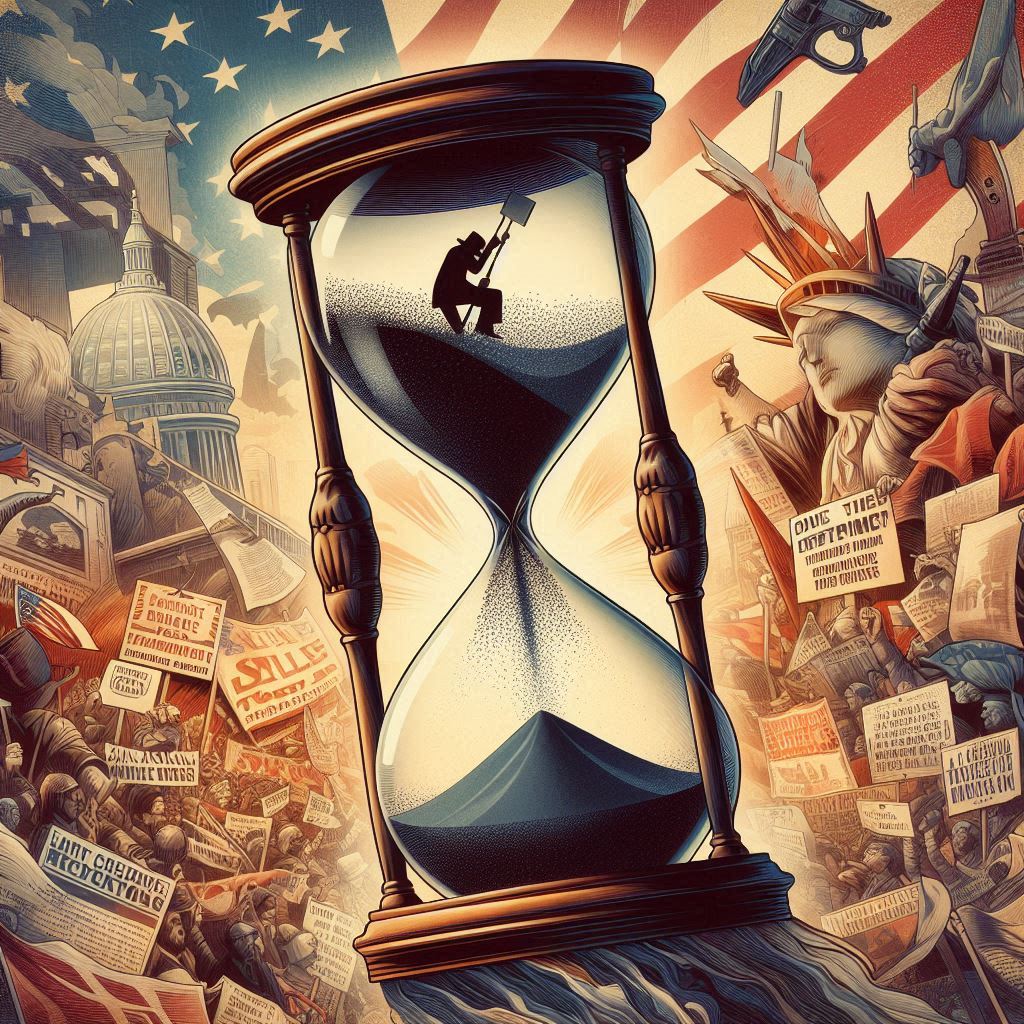
To Lower The Temperature, Fix What We Can.
Folks, if you’re not subscribed to Abe Greenwald’s afternoon newsletter, open another tab on your browser and do it now.
Rather than call for revenge, or “national divorce,” or say “Charlie said controversial things, so, you know…,” or retreat into spaces that make us feel comfortable in our opinions of the other side, perhaps we should roll up our sleeves and do the hard work of addressing the problems our society faces. It’s what every previous generation of Americans did when they faced seemingly intractable problems. The only time Americans didn’t do that, hundreds of thousands of young men died in a bloody civil war. Let’s not make that mistake again.
As Greenwald writes, to say “let’s lower the temperature” is an excuse. The temperature will only come down when problems are solved. Let’s do that instead. It’s not easy, but it’s necessary.
From Abe Greenwald’s newsletter last night:
Advising that we “lower the temperature” is a way of casting a wand over the country in hopes that we don’t need to address the many diverse challenges that have contributed for years to our national fever. In practice, lowering the temperature would mean making headway on a host of distinct, yet thoroughly intertwined, modern dilemmas. Among these are the florid mental-health crisis of Generation Z, the unchecked slime of social media, the explosion of conspiracy theories, the decline in religious faith, the infiltration of our discourse by foreign saboteurs, the radical capture of cultural and political institutions, the disappearance of political incrementalism and bipartisanship, the ideological siloing of Americans, the bifurcation (or thorough fracturing) of media, a growing preference among Americans for isolation, and a public square too chaotic to navigate.
This is a lot to work on. And in the end, merely hoping to lower the temperature is a reluctant admission that we’re out of useful ideas about what to do. It’s a bit like telling someone in a crisis to “just try and relax.” If they could, they would. And if they did, it wouldn’t make the crisis go away. It might even allow it to fester.
Here’s the thing. There’s no good reason for us to be out of ideas. Taken individually, many of the problems listed above are bedeviling but far from intractable. Mental illness is treatable—imperfectly perhaps, but measurably. Foreign influence operations can be and have been dismantled. Institutional drift can be slowed, halted, and even reversed. Media are restructuring in hopes of reaping the rewards of different, less partisan, models.
The fact that some of the challenges (particularly, the social media sewers) do seem genuinely overwhelming is precisely why we’d do well to remember the incrementalism part. That means we fix what we can, where we can, to the degree that we can. Let’s try that for a while and then see where the general temperature stands.
