
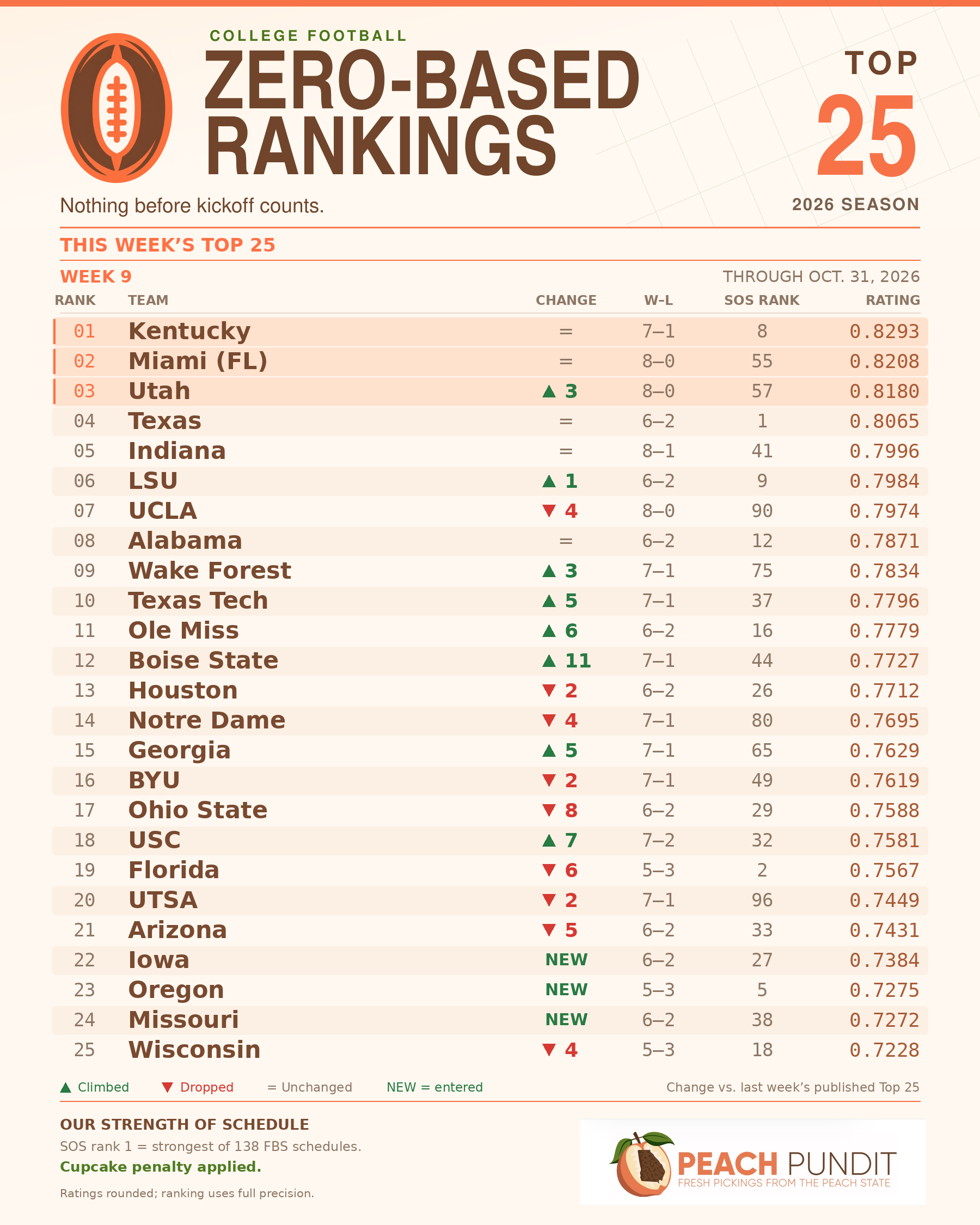
Zero Based College Football Rankings, Week 9: Count the Actual Games
Kentucky is still No. 1. Texas is fourth. Ohio State is seventeenth. Somewhere, a fellow with three monitors and a subscription to something is preparing to explain why the football games have interfered with his understanding of football.
Dear Reader, I have grown tired of predictive models.
A team loses on Saturday, and immediately somebody wants to explain that it would win nine out of ten against the same opponent. Apparently, the players spent four quarters participating in the inconvenient tenth game. We should all apologize for allowing that one to appear on television.
Then comes the explanation about how the predictive model still loves the loser. The roster is more talented. The efficiency numbers are better. On a neutral field, with suitable weather and perhaps a permission slip from the analytics department, things would surely have gone differently.
Well, hell. Schedule it. Until somebody plays that game, the winning team has the victory we can actually evaluate.
ESPN is perfectly open about what its Football Power Index is designed to do: predict future performance. A forecast can help somebody set a betting line, but using it to award standing for an accomplishment requires the additional step of actually accomplishing something.
College football has spent years building an elaborate appeals process for results that offend expectations. A favorite loses, and we promptly convene a hearing about how good it looked while doing so. An unexpected contender keeps winning, and the prosecution demands to know whether it would survive a hypothetical trip to somebody else’s stadium.
I would like the football season to count while we are having it.
Rankings should begin after Week Six. Let the teams play enough games to build a schedule we can meaningfully evaluate. An August declaration that somebody faces a murderous schedule relies on assumptions about opponents who have yet to accomplish a single thing that season. Give those assumptions a television graphics package, and suddenly everybody treats them as evidence.
Zero Based Rankings evaluate this season’s completed games. Every team begins equally. Wins earn value from the opposition beaten. Losses carry costs based on the opposition that won. The cupcake penalty applies when teams shop below their division. We calculate strength of schedule from that same network of results, and every week the entire season gets another look.
The formula makes judgments about how to value those results, and it applies the same rules to everybody. Our rankings tell you how the completed resumes compare under those rules. Any claim about who would win next Saturday requires a separate prediction.
Kentucky sits at 7-1 against our eighth strongest schedule. The Wildcats remain first, and I assume somebody in Lexington is checking whether the basketball program is even a thing anymore. Their wins and their opposition have earned them that position in this calculation. The name on the jersey contributes precisely as much as mine would.
Texas remains fourth at 6-2 against the strongest schedule among the 138 FBS teams. The Longhorns have wins over UTSA, Ole Miss and Ohio State, alongside losses to Oklahoma and Florida. All of it goes into the evaluation. Two losses are a cost. Beating substantial opposition supplies credit. We can manage both thoughts without asking the smoke filled back room to break the tie.
UCLA supplies this week’s invitation to throw furniture. The Bruins improved to 8-0 and fell from third to seventh. Their opponents have a combined 27-39 record, and their schedule now ranks 90th. The unbeaten record remains a substantial accomplishment. The value of the opposition keeps changing as those teams keep playing.
A win over somebody whose season falls apart loses some of its shine. Your September opponent has responsibilities after September, even if you would prefer that it remain permanently preserved in the condition described by the broadcast crew.
Utah is also 8-0 and climbs three places to third. Its schedule moves from 90th to 57th. Boise State jumps eleven spots to twelfth as its schedule rises from 78th to 44th. The Broncos are 7-1. Their résumé, and the network of results behind it, strengthened enough to move them past teams clustered above them.
Georgia rises five places to fifteenth at 7-1, but the lost to Auburn (who lost their FOURTH game) and the cupcake penalty are really showing up this week. Ohio State drops eight to seventeenth at 6-2. I expect the latter position could produce a fascinating seminar on how Ohio State would fare against teams it has yet to play. Please send the syllabus to somebody who ranks imaginary football.
We added 115 completed games this week, bringing the evaluated network to 1,156. Every earlier win and loss was revalued too. Movement comes from your own results, your opponents’ results and the results behind theirs. Closely packed ratings can turn modest numerical changes into large jumps in the standings.
I welcome an argument about the weighting, the schedule calculation or a result we entered incorrectly. Those are useful discussions about evidence and how we evaluate it. The demand that we award your team credit because a computer believes it would beat somebody someday can wait for an actual kickoff.
Put the matchup on a schedule. Let the players settle it. We’ll count the actual game.
