
Georgia Court Politics: Activism vs. Impartiality
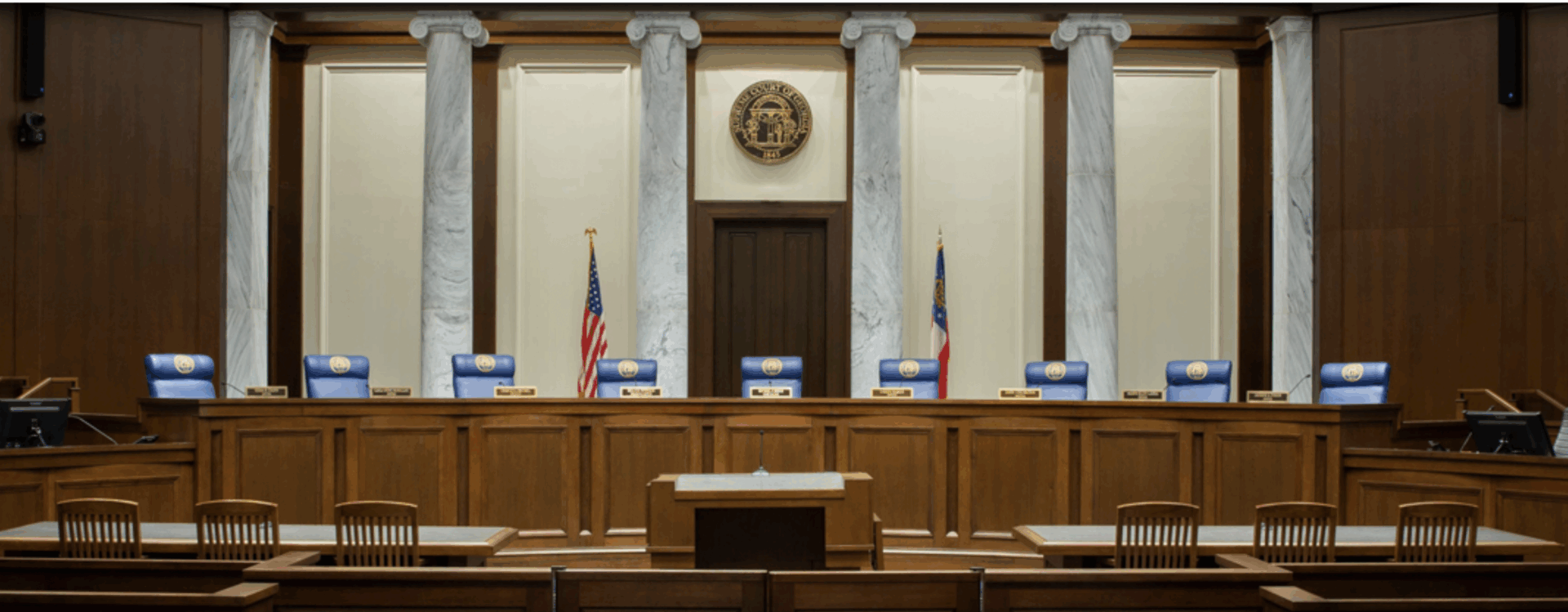
For the May 19 election, some of the races I am asked about most frequently are those for the Georgia Supreme Court and the Georgia Court of Appeals. While the races for U.S. Senate and Governor get most of the attention, these court elections are not primaries; they are the final vote in the nonpartisan general election, deciding who will sit on the bench for the highest courts in Georgia. The stakes are high.
The incumbent judges are running on platforms focused on the independence of the judiciary and the rule of law, while the challengers are backed by leftist groups and campaigning on abortion. There has been massive spending from outside entities seeking to shape our courts to conform to their views. We have seen this playbook before.
In 2024, former Democratic Congressman John Barrow attempted to unseat an incumbent on the Georgia Supreme Court, Justice Andrew Pinson. Barrow ran on a platform largely dedicated to supporting abortion. His campaign was backed by luminaries of the abortion industry, including Planned Parenthood and Reproductive Freedom for All. Justice Pinson ran a campaign focused on the rule of law, not personal bias. Justice Pinson weathered the storm and won a convincing victory.
Now, in 2026, Miracle Rankin and Jen Jordan are attempting the same gambit as John Barrow, only with even more partisan support, including former Vice President Kamala Harris, Senator Jon Ossoff, and former House Minority Leader Stacey Abrams. In addition, the Democratic Party of Georgia and dark money groups from the radical left are spending massively backing Miracle Rankin and Jen Jordan in these ‘nonpartisan’ races.
Rankin and Jordan went so far as to specifically voice their support for “Reproductive Freedom for All Georgians” in their joint campaign announcement. The AJC has reported that Rankin and Jordan are bringing a legal challenge against the Judicial Qualifications Commission. John Barrow tried a similar tactic in 2024, which was dismissed. This is beyond a Trojan horse moment; Rankin and Jordan have openly embraced their personal views in their campaigns for the Georgia Supreme Court. This is yet another example of the radical left eroding faith in our institutions.
Voters should be clear-eyed about what this means. Judges are not legislators. Their role is not to decide what the law should be, but to interpret what it is. When campaigns begin to sound like policy platforms, it becomes nearly impossible to maintain confidence that the courtroom will remain separate from the campaign stage.
Governor Brian Kemp has weighed in to this end, saying: “Georgia is the No. 1 state for business and the greatest place to live, work, and raise a family because we have nonpartisan Supreme Court justices like Sarah Warren and Charlie Bethel who uphold and defend our Constitution every day.”
Justice Charlie Bethel’s stated approach: “He [Justice Bethel] understands that judges must set aside their personal preferences in deciding each case before them and that they must follow the law, even when the outcome may be unpopular.”
Similarly, Justice Sarah Warren has stated: “I believe in interpreting the law faithfully, without fear or favor, without bias, and apart from personal opinion.”
These races are a choice between activism and impartiality. The outcomes will shape not only the composition of our courts, but also the public’s trust in them for years to come.
Early voting is happening now through May 15, and Election Day is May 19. Get out and vote.
