
Atlanta: The Surveillance Capital of the World
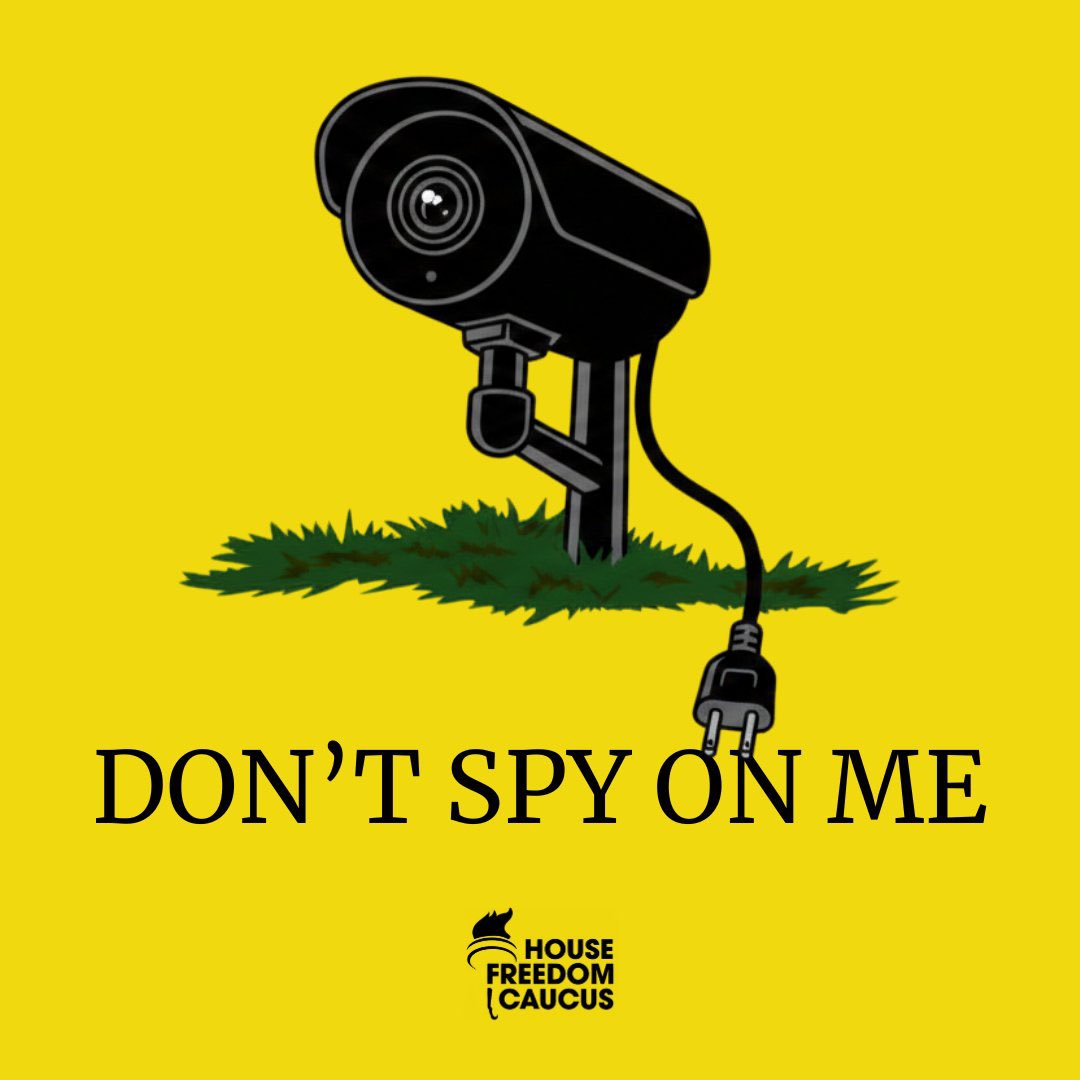
Since March, I’ve been working with a coalition, led by Demand Progress, to advocate for reforms to the Foreign Intelligence Surveillance Act. Mostly around two primary issues with one prominent subtheme: requirement a warrant to query Americans’ data that is captured through incidental collection (a popular reform measure that helps restore some Fourth Amendment protections), closing the data broker loophole (if it would normally require the government to get a warrant to access the information, it can’t just buy it from third parties on the open market), with the subtheme of what happens when AI gets introduced.
While I no longer play for the red team and have no real desire to play for the blue team (though should there be more members like Scott Holcomb or Bob Trammell we can talk), life is interesting as a politically homeless centrist with a libertarian streak. Civil rights are one of those hills I’m willing to die on. So, it’s been an absolute joy to go back to working with the coalition this reauthorization cycle after working with them when I was at FreedomWorks for the 2024 FISA reauthorization fight.
If the federal government should need a warrant to query Americans’ data it already swept up incidentally, Atlanta’s police shouldn’t get a free pass to query a 46,000-camera dragnet without one either. More fundamentally, I don’t think a network that large, watching that much of the city, should exist at all — warrant requirement or not. Our founding fathers rebelled precisely because of an invasive government who refused to follow the rule of law. Then in 1791, the founders ensured that there would be consequences should the State FAFO. The Second Amendment provides for a pretty strong deterrent should the State want to violate the First, Third, or Fourth.
I saw an article from Ammiel Forbes about Atlanta and AI Surveillance. It turns out that Atlanta is the most surveilled city in the United States and is only surpassed by Chinese cities if you want to look at things globally. When you think of a city that has lots of surveillance in the United States, you would probably think DC (#2), LA (#16), or NYC (#18). And globally you might think of London (#12 globally, though Atlanta didn’t count as a “major city”).
A city with just barely above 500k people in its city limits has a mind-boggling 124 cameras per 1000 residents. NYC has 9 cameras per 1000. So that tracks. Cop City is ten times the size of NYPD’s training center and we have almost 14 times more cameras per 1000. Chief Schierbaum has a surveillance capacity that Erich Mielke probably couldn’t even have imagined.
Some of these are Flock cameras, which I wholeheartedly agree with Lane: Flock is a bad actor. But most cameras aren’t Flock branded. If you ever see a website that begins with connect[insert city here], that’s an Axon front. Axon is a Flock competitor, with slightly less name ID. Atlanta’s version is actually terrifying with how many cameras, mostly private, are enrolled into this dragnet surveillance. With a 1.65:1 ratio, there are 28,608 cameras in Atlanta that Axon has direct access to (that APD can watch in real time) vs. 17,285 registered cameras (cameras law enforcement knows they can go say hi and ask for footage without a warrant). And the Atlanta Police Foundation is all about enrolling more into the system.
“bUt ERiC u dONT HaVE a ReaSonABlE ExPeCTaTion Of pRIVacY WhEn Ur in PUBliC”
That is correct, I don’t have a reasonable expectation of privacy in public.[i] If you want to take a picture of me on a MARTA ride, go for it. The problem is when all of these videos/photos are connected with my car tag, the taps of my MARTA card, the Bluetooth signals from my phone/laptop/car/earbuds/e-reader, the RF signal from the TPMS of the car, the unique advertising ID on my phone/tablet/smartwatch (I recommend you reset it frequently and turn off personalized ads), the GPS signal from the car, oh the little SIM card that’s embedded for OTA updates. Then you can start to build a very complete and incredibly intrusive picture into my life. Never mind that with the advances in machine learning (artificial intelligence) it’s not only possible to analyze the gait pattern of a person, but when the technology exists to analyze my iris pattern from 40 feet away IN A CAR’S SIDE VIEW MIRROR we have a civil rights nightmare. And that talk was from 8 years ago. The tech has only gotten better.
While SCOTUS has established that we do have a reasonable expectation of privacy for the whole of our physical movements, both long-term (Carpenter, 2018) and short-term (Chatrie, 2026), we still have a lot of the third-party doctrine intact. The government can still circumvent the Fourth Amendment by buying from data brokers. That’s where the Bluetooth IDs, device IDs, and unique advertising IDs come into play. All of that info is for sale, and a SQL JOIN command is pretty easy to run.
“buT We gOtTa caTCh tHe drUg dEAlERS ANd tERRoRIsTs”
Sure, but this can also be used by the government to:
- arrest folks for practicing their religion during dubious states of emergency.
- prosecute protestors of any persuasion for protesting the government.
- build a list of gun owners based on IDs that show up near gun ranges, gun stores, pawnshops, other firearm-related activities, credit card purchases, face ID from cameras nearby gun-related facilities. Never mind that a pretty comprehensive list already exists.
- figure out who is getting disfavored healthcare (abortion or IVF, it’s a coin toss in today’s environment).
While this also creates a juicy source for hackers, it also makes it really easy for misbehaving law enforcement officers to abuse the system.
- The GBI has arrested and charged Anna Altobello, age 33, with eight counts of Misuse of License Plate Data, one count of Stalking, one count of Stalking – Family Violence, and one count of Violation of Oath of Office.
- Braselton chief arrested, accused of using police cameras to stalk people
- Former Coffee County Deputy Chris Ashley Rozar was arrested May 5, 2026, following a GBI investigation that began in 2024. He faces multiple charges, including violation of oath, computer invasion of privacy, misuse of license plate data, and stalking.
- Richmond County Sheriff’s Office Investigates Misuse of License Plate Reader System; Deputy Arrested and Terminated
- Cherokee sheriff’s deputy accused of misusing license plate reader database
- 2 more Cherokee deputies accused of misusing license plate reader database
- Officer Renee Downer was arrested and relieved of duty after allegedly using law enforcement databases, including a license plate reader system, to monitor the location of an ex-romantic partner.
Back to the Atlanta Police Foundation. Dave Wilkinson, the President/CEO and 22 year vet of the USSS, recently was talking about how cameras make the city safer. At a Community Development and Human Services Committee Meeting (here) he talks about the camera network and, inexplicably, he links it to Tax Allocation Districts. Philosophically, I’m generally opposed to everything he says in this testimony. I live in an over-policed neighborhood, and generally I don’t find the Atlanta PD to be particularly helpful any time I have called them (so I stopped calling them). The last time I called was after walking up on a motorcycle wreck. The APD precinct was 8 minutes away and the AFRD station was 6 minutes away. It took 58 minutes for anyone to show up. I’m glad my neighbor wasn’t bleeding out.
What isn’t my philosophy though is that the data says more cameras do not make us safer. Here’s the EFF’s thoughts and Wired, but also here’s something more data-driven. In probably the gold standard right now, cameras show a real, substantial effect in exactly one narrow context: actively monitored parking lots and parking decks, where the best national evaluation found crime dropped by as much as 51% (Farrington, Gill, Waples & Argomaniz, 2007) — one of the largest effect sizes in the entire crime-prevention literature. I’m not going to pretend that’s a small number. But notice what’s doing the work: active human monitoring in an enclosed setting. Wilkinson and Schierbaum aren’t running a parking deck; they are running a passive, open-air, citywide network —a dragnet Fourth Amendment-violating AI eye in the sky across Atlanta. And I say they are running because this is a joint venture of sorts. Passive monitoring, mostly what Atlanta is, “passively monitored systems, which showed non-significant effects across all three meta-analyses” (Piza et al., 2019). Meanwhile Ashby (2017) says that cameras are useful after the crime has been committed but not so useful for preventing it in the first place.
Can we please have an honest discussion about this that doesn’t lead to me looking for a stunningly beautiful 1989 Jeep XJ that doesn’t need a frame up restoration and removing every single emitter of RF while turning the center console into a Faraday box? We fought a war over the use of nonspecific general warrants; we don’t need to be bringing them back 250 years later and just calling them AI assisted cameras.
Riffing off of Ben Franklin, Liberty is great, if we can keep it.
[i] Katz v. United States, 389 U.S. 347 (1967) (“knowingly exposed to the public” is not protected); United States v. Knotts, 460 U.S. 276, 281 (1983) (“A person traveling in an automobile on public thoroughfares has no reasonable expectation of privacy in his movements from one place to another.”).
