Voluntary Portable Benefits Would Empower Georgia’s Entrepreneurs and Workers
This is a guest post by Austen Bannan, an Employment Fellow at Americans for Prosperity.
This week the Georgia House Industry and Labor Committee passed HB 987, the Voluntary Portable Benefit Plan Act, introduced by Representative Todd Jones. “Independent workers deserve flexibility
choice and access to benefits that fit the way they work,” said Rep. Jones. If Georgians are fortunate, this bill will eventually advance into law with bipartisan support this legislative session to achieve just what Rep. Jones is championing.
For those who grew up in Georgia like me, seeing the continued growth and success of Georgia’s economy has always been a source of pride. As Georgians know, it isn’t just the large Fortune 500 companies setting up their headquarters in metro Atlanta – countless small business entrepreneurs and self-employed workers making a living and improving their communities all across the state.
To help more Georgia families succeed in the 21st century, however, there is a chance to remove a longtime barrier at the state level that would also tee Georgia up to further maximize opportunities if or when federal reforms are also enacted. H.B. 987 would remove some of the barriers that make benefits less affordable and less accessible for self-employed workers and small business entrepreneurs.
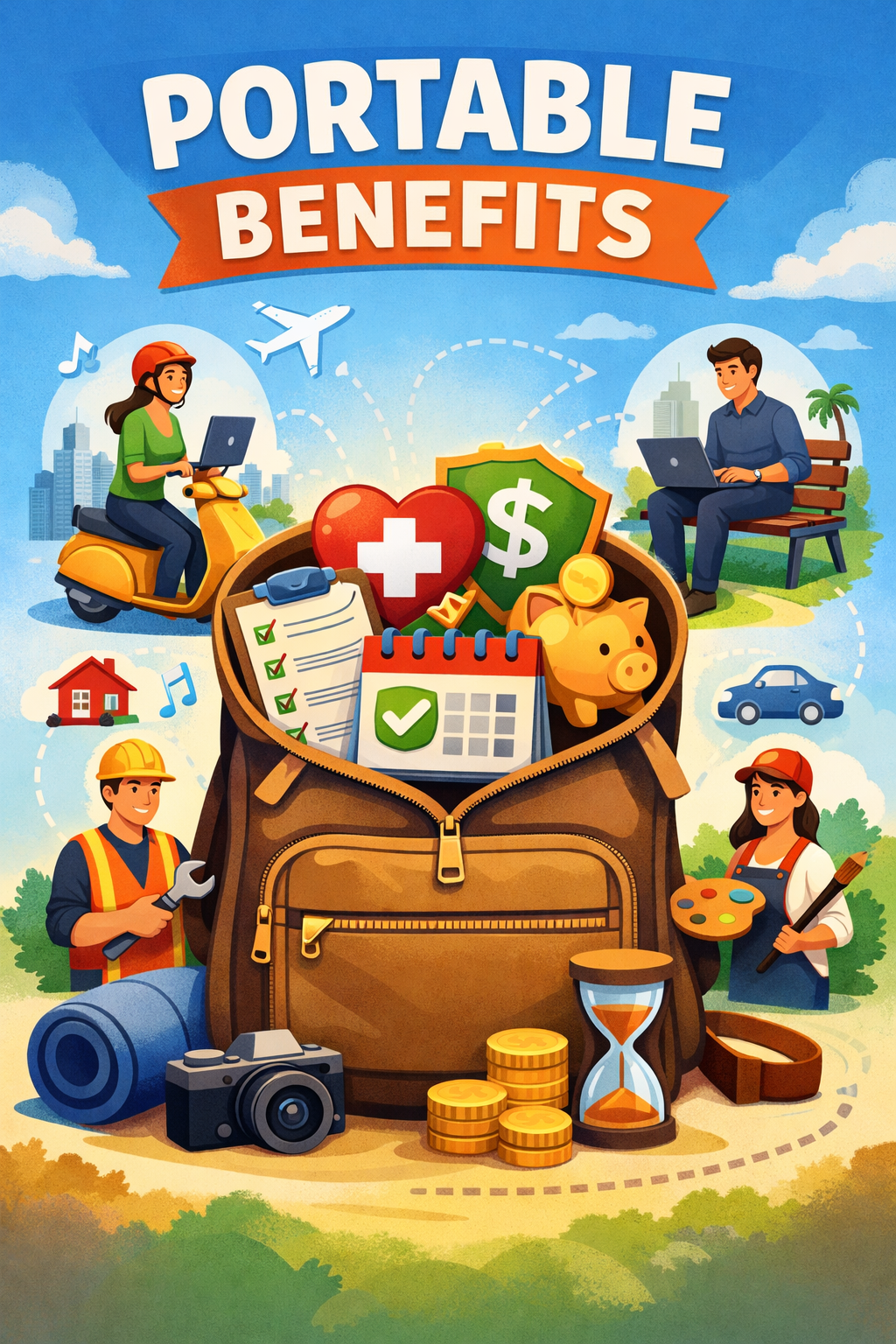
It would do so by creating a new voluntary portable benefits system. Self-employed workers could open portable benefits accounts offered by financial institutions or other approved entities, and the accounts could then be funded directly by workers or business clients that compensate workers for services they provide. Workers could spend money from the accounts as they see fit on current benefits they have, health expenses, or new benefits offerings from providers. Those include health insurance, unemployment insurance, disability insurance, life insurance, and retirement benefits.
Despite a strong preference among the self-employed to keep their status under even current conditions – the Bureau of Labor Statistics (BLS) recently found in a survey that only approximately 8% of independent contractors (ICs) would instead prefer a traditional work arrangement – reduced access to affordable benefits compared to traditional employees is one aspect of self-employment that workers say could be better. In fact, BLS recently found that independent contractors were nearly 11% less likely to have health insurance than traditional employees, and research on Uber independent drivers showed that over half of those with health insurance had it through a spouse.
Interestingly, some Georgians have already experienced portable benefits with positive results. DoorDash ran a 6 month pilot program in the first half of 2025, and nearly 5,500 drivers opened the optional accounts. They used the money for health insurance, income replacement, putting money aside for future benefits, and other benefits. The results in just that small experiment begin to show how valuable voluntary portable benefits could be to Georgia’s full independent workforce if made permanent:
- “Nearly 75% of respondents who did not already have access to all the benefits they wanted or needed gained access to benefits they would not otherwise have.”
- “About 73% of respondents feel more financially secure, and 91% would feel more secure if the pilot program were made permanent. For those who do not already have access to benefits, these numbers rise to 81% and 95%.”
So, who would benefit from voluntary portable benefits if H.B. 987 were enacted? It’s small business entrepreneurs, working mothers who want flexibility to raise children while continuing careers, people with disabilities who cannot work normal 9 to 5 jobs, and many others who simply want to be their own boss and maximize flexibility and control in their careers. The Mercatus Center recently found that over 1.1 million Georgians are freelancers, contractors, and other self-employed workers. Top industries include:
- Construction
- Other Services (e.g., repair, personal care)
- Professional, Scientific, & Technical Services
- Transportation & Warehousing
- Real Estate & Rental Leasing
- Administrative & Support Services
- Retail Trade
- Health Care & Social Assistance
- Arts, Entertainment, Recreation
- Finance & Insurance
As a part of efforts by Georgia leaders to continue improving economic opportunity and affordability, H.B. 987 could help millions of Georgia workers and their families by removing obstacles that have given self-employed workers disadvantages in pursuing affordable benefits. Similar reforms have already been enacted in such states as Alabama, Tennessee, and Utah, and numerous others have introduced legislation as well. This year, Georgia lawmakers have a chance to be at the forefront of expanded opportunity, helping to set a national trend while improving quality of life right at home.
