
What are conservative principles?
I recently made a comment online about moving forward and supporting conservative principles. Someone asked me what those principles are, and if anyone remembers them anymore.
It’s a fair question. A whole lot of people, on both sides of the aisle, have abandoned nearly everything they ever claimed to believe, either to support Trump or to defeat him. Well, the party he leads was just defeated, by generational margins, and whether that had happened or not, his final term was always going to be over in two years. Building our entire political identities around supporting or opposing one man is pretty clearly unsustainable once that man isn’t around anymore.
So here is my personal attempt at defining the principles around which we can reset the Republican Party. To the greatest extent possible, I’m trying to avoid specific political positions. Many such positions will derive naturally from our principles, and others can be genuinely debated amongst conservatives of good faith. But we have to understand who we are, and are not, and what we stand for, and against, before we can even start to write a policy platform.
Truth first, always
That might seem like a Pollyanna concept for the political realm. But there’s a difference between spin, which is presenting true facts in the way that best supports your position, and just flat-out lying about what has happened or is happening. Of course we will make our political case the best we can. But we will both practice and demand a basic level of honesty. We will not accept politicians telling us things that are not true. We also won’t penalize them for telling harsh truths instead of comforting lies.
Character matters
We don’t expect perfect candidates; there are none. And forgiveness is an important value, both morally and spiritually. We hope that when our politicians err, they apologize and seek it, just as we hope the same for our friends and family. But forgiveness isn’t the same thing as trusting with power. If someone has lied, cheated, stolen, been unfaithful, or otherwise broken the trust of others, and particularly if they have done so repeatedly, we do not cast them out, but we expect remorse and amends, and the reward for such is redemption, not leadership. Conversely, we seek out those for leadership positions who have consistently demonstrated excellent character, particularly in times where such a demonstration is the harder path.
Respect the Constitution
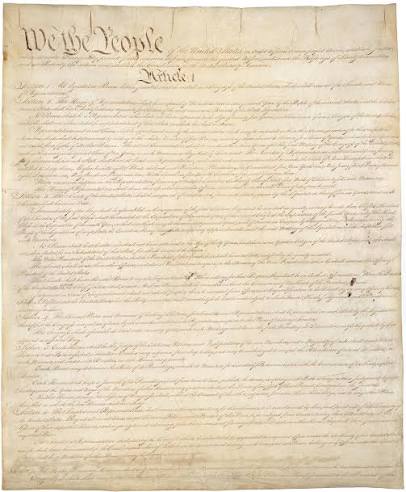
This means all of it. There are no “conservative” or “liberal” amendments in the Bill of Rights. Free speech, bearing arms, due process – it all matters. So do separation of powers, checks and balances, and the limitations placed on government power. And so does our state Constitution. Before we enact a law, we have to ask ourselves whether the law is Constitutionally permissible. If not, and it’s still something we think is important to do, we accept that we will have to go through the difficult process of amending the Constitution, and not simply ignore it or hope we can convince a court to rewrite it.
People are unique, yet equally valuable
We are individualists, not collectivists. We do not believe that a person’s skin color, racial background, gender, or other immutable characteristics make that person any more, or any less, valuable than any other person. We do not believe in differential treatment on the basis of such immutable characteristics. Our only religious tests are that regardless of your own religion, you treat people of all faiths and no faith equally, and that if you do publicly profess a faith, you do it with your actions at least as much as with your words (see also “Character”, above). All human life has value; this is not a specific policy proposal, but a principle that, unless it conflicts with other core values, the policy that preserves life is preferable over the policy that does not.
Politics is a service, not a career
The purpose of winning elected office is always to serve the interests of the constituents, and never to be a stepping stone to further office. Our model here is Cincinnatus, who led the Roman Empire in a time of crisis and then voluntarily ceded power to return to his farm.
Conserve that which is worth conserving
The very name “conservative” imputes a view that we have built something worth keeping, and thus we seek to keep it. But we don’t aim to live in the fossilized remains of a dead society. Just as we may preserve the classic Corvette but throw out the old Betamax player, we seek to conserve that which history has proven valuable, and move on from or improve that which it has not. We consider the values on this list timeless and worthy of conservation, but we pledge to reform or discard policies that do not support these values or have not proven to accomplish their stated aims.
Respect intelligence, experience, and ability, until proven otherwise
We live in an advanced, modern society, and many of the issues our leaders face are complex. It benefits us to have leaders with the backgrounds to understand and make wise decisions about these issues, and with the willingness to accept input from others with deep experience. We do not support credentialism, and we do not pretend that “consensus” is the same as “truth”, but we also acknowledge that opinion does not outweigh expertise, and where they conflict, we rely on facts, data, and observed results to resolve the disagreement.
Policy over politics
Winning elected office may be a necessary step in achieving political goals, but we do not treat it as the end goal. We welcome a diversity of viewpoints, where they are consistent with our principles, but we do not cede any of these principles for the purpose of winning office, and we do not accept, let alone celebrate, poor policy or poor behavior just because it comes from our “team”.
Government is a tool, not the goal
We are not Libertarians, and we recognize that there are cases where government intervention is necessary, or even preferable. But we also believe that government works best when it’s small and close to the people, not distant and bureaucratic. We prefer private-sector solutions where practical, and when they’re not, we try to solve the problem at as local a level of government as is possible. We consider both the intentional and unintentional effects of any policy we advocate, we understand that almost any policy will have a negative effect on someone, and we make every effort to both maximize the good we do and to minimize the harm when taking any policy action.
Scot and Buzz had a good discussion on the most recent Peach Pundit podcast, but the above list is entirely my own writing and views. Again, I’m not trying to write a policy platform. Rather, I’m describing the type of person I’d like to see writing such a platform, or running for office. If I knew nothing about a person’s political views, but I knew for a fact they would adhere to the above principles, would I be willing to vote for that person?
I’d love to hear from other Georgia conservatives what they’d add, change, or remove from this list. I’m certainly not the decider of what Republican values and principles should be. But we can either decide what they are, and then build a platform, slate, and campaign program around them, or we can wander in the wilderness while the Democrats dominate our politics. I’d certainly prefer the former.
