
Georgia Will Still Be Here on Wednesday
It’s Election Eve in Georgia, which means we’re approximately one more “URGENT” campaign text away from collectively filing for a restraining order.
The ads have been relentless, the rhetoric has been exhausting, and we’ve spent the better part of a year being told that the future of civilization depends on the outcome of an election in which roughly half the state is going to be disappointed.
And now, after all the money, the speeches, the debates, the accusations, and the yard signs, the voters get the final word.
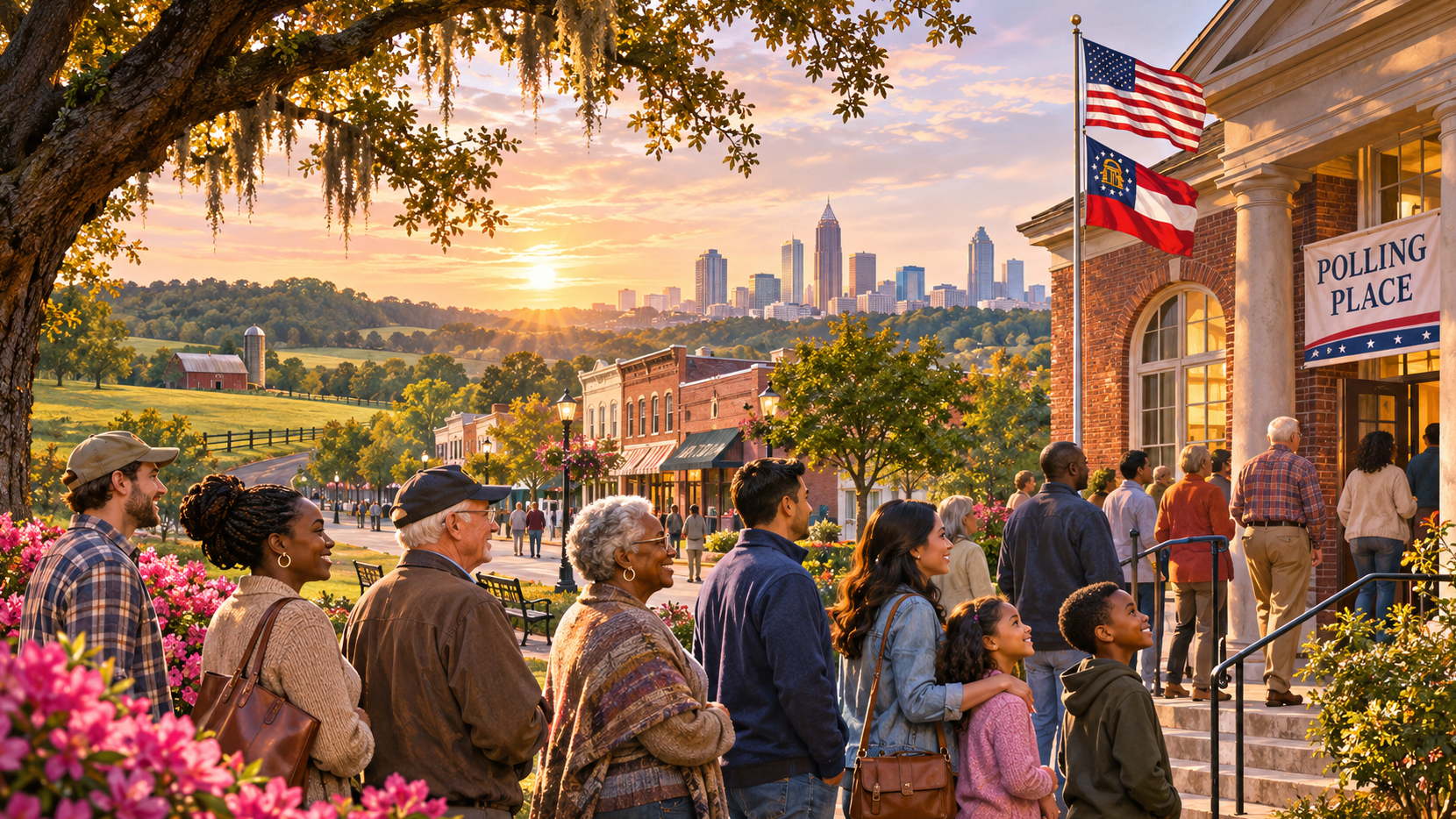
Millions of Georgians have already cast their ballots. Some are longtime voters who wouldn’t dream of missing an election. Others are participating for the first time, or returning after sitting out previous elections. Young voters, retirees, suburban families, rural communities, and everyone in between have been making their voices heard.
Every one of those ballots represents a Georgian who made a decision to participate in the government we share. There’s something encouraging about that, regardless of which candidates ultimately benefit.
Tomorrow, Georgians will decide whether Jon Ossoff returns to the United States Senate or Mike Collins takes his place. We’ll choose between Rick Jackson and Keisha Lance Bottoms for governor, elect other statewide officials, fill every seat in the General Assembly, and decide questions that will affect our communities for years to come.
The stakes are substantial. The disagreements are genuine.
Georgia has changed considerably over the past generation. The Republican revolution that transformed state government, the growth of metro Atlanta, the changing political character of our suburbs, and the increasingly competitive statewide elections have all contributed to a political landscape that would have been difficult to imagine thirty years ago.
And throughout those changes, Georgians have continued doing what Georgians do. Building businesses, raising families, volunteering in their communities, attending church, coaching Little League, and complaining about traffic.
Especially the traffic.
The small business owner in Cherokee County, the farmer in South Georgia, the young family trying to afford a house in Gwinnett, and the retiree worrying about property taxes in Cobb County all have legitimate concerns about the direction of their government. They may reach very different conclusions about who should lead it.
They will still share a state on Wednesday.
Political campaigns have a way of reducing millions of complicated human beings to a handful of demographic categories and partisan labels. Consultants spend fortunes trying to determine which messages will motivate which groups. Television advertisements offer competing portraits of a state that apparently exists in either perpetual prosperity or imminent collapse, depending on who’s paying for the airtime.
Real life is considerably more interesting.
People disagree about the proper size and role of government, taxes, education, public safety, and the direction of our country. Some of those disagreements reflect deeply held convictions that deserve serious consideration. Others arise from different experiences, priorities, and understandings of the problems we’re trying to solve.
And sometimes we disagree because somebody on the internet said something spectacularly stupid.
Having served in the General Assembly, I’ve seen people who disagreed passionately on one issue work together productively on another. It happened more often than the public probably realizes. Occasionally, we even managed to accomplish something useful.
The next governor and legislature will inherit plenty of difficult work. Families are struggling with the cost of living. Rural communities are trying to preserve their economies and essential services. Our growing suburbs need infrastructure. Property owners are frustrated with their tax bills. Questions about education, healthcare, technology, public safety, and the proper limits of government will demand attention.
Those challenges will be waiting Wednesday morning, along with the people who expect their elected officials to do something about them.
Whoever wins will have a responsibility to govern a state that includes millions of people who voted for somebody else. The people who lose will still have a voice in what happens next. Our system gives citizens opportunities to organize, advocate, challenge government decisions, and hold their representatives accountable between elections.
There will almost certainly be hard feelings when the results come in. Some races may be close enough that we won’t know the outcome tomorrow night. Questions may arise that require additional scrutiny, recounts, or other established procedures.
We should expect our election laws to be followed faithfully, our election officials to perform their duties transparently, and legitimate concerns to be addressed through the processes established for that purpose. The people who administer our elections deserve appreciation for their hard work, and the public deserves confidence that the rules are being followed.
We can insist on all of those things while treating one another with a little grace.
The beauty of representative government is that its work continues after Election Day. Elections settle who gets to make decisions for a time, but the people always retain the ability to challenge those decisions, change their representatives, and pursue a different direction.
Georgia’s future will also be shaped by people whose names never appear on a ballot; entrepreneurs taking risks to build something new, teachers finding ways to reach struggling students, volunteers helping neighbors through difficult circumstances, and parents working to give their children opportunities they never had.
And the countless Georgians who do good things every day without expecting a press release or a ceremonial proclamation from the governor. There is an extraordinary amount of good happening in this state, even if it rarely makes the evening news.
Perhaps we’ll see some surprising results tomorrow. Perhaps we’ll see a divided government, a shift in political power, or another reminder that Georgia voters have become rather difficult to pigeonhole. Whatever happens, the people who make their homes here will continue finding ways to move forward.
So tomorrow, vote if you haven’t already. Encourage your friends and neighbors to participate. Thank the poll workers. Watch the returns. Celebrate your victories, and handle your disappointments with some dignity.
And perhaps resist the temptation to declare the end of the republic before the last precinct reports.
On Wednesday morning, some Georgians will be celebrating. Others will be frustrated. Political consultants will be explaining why their predictions were actually correct all along. Somebody will already be announcing a campaign for 2028, because apparently we aren’t allowed to enjoy even a full day of peace.
The yard signs will still be standing. The campaign texts may finally stop. Our neighbors will still be our neighbors.
And Georgia will still be home.
There is plenty of work ahead, plenty worth preserving, and plenty of reason to be hopeful about what comes next no matter who wins.
