
When the words on the ballot don’t mean what you think they mean
This is going to be an uncharacteristically short post for me, but I think it’s worth adding beyond a social media post.
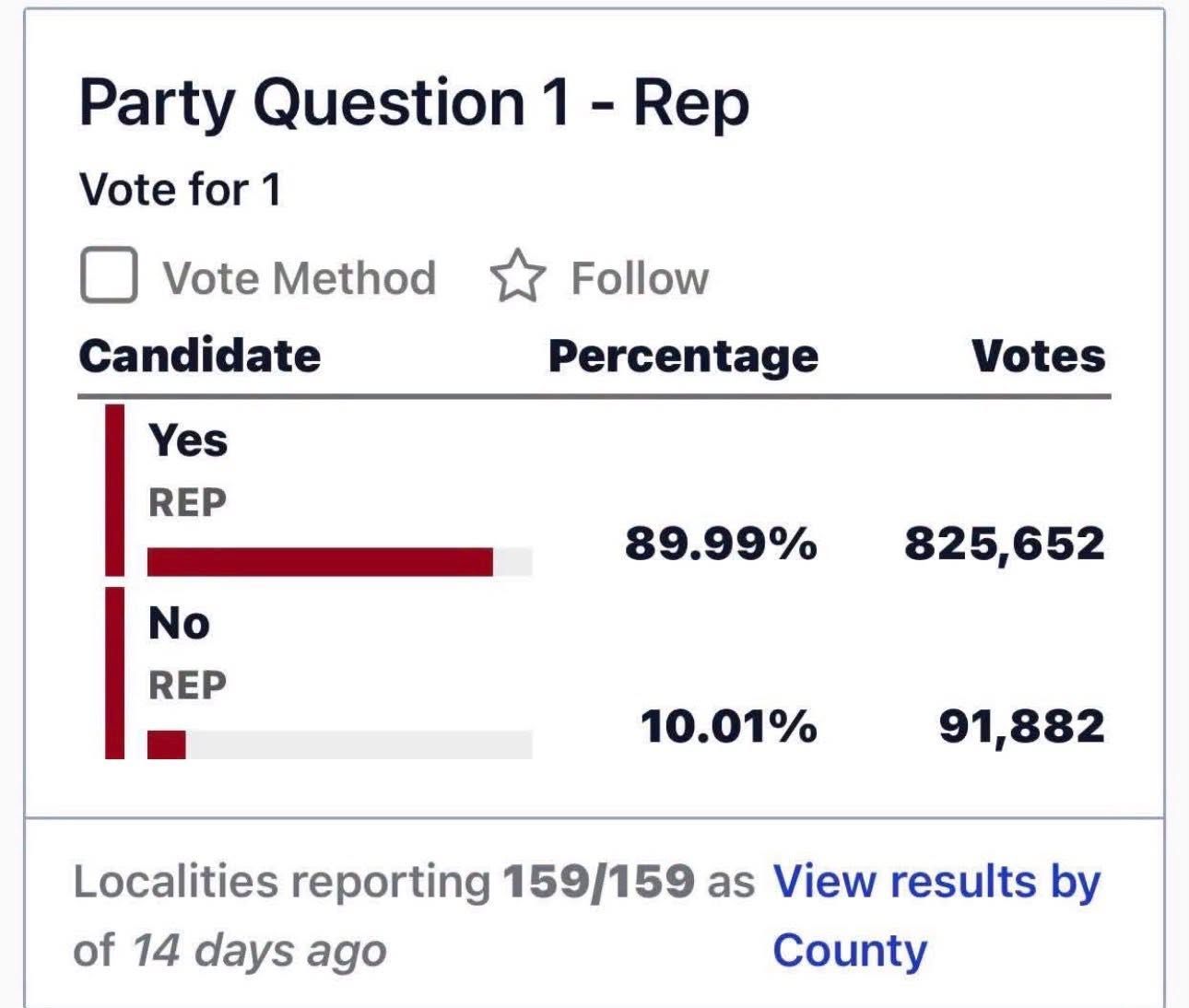
During the Special Session, many members of the Election Integrity Industrial Complex™ have been sharing this screenshot of one of the questions the Georgia Republican Party placed on the ballot. The image notes nearly 90% of Georgia Republican Primary voters voted in the affirmative on this ballot question:
“Should Georgia enact the strongest election integrity measures possible, which may include hand marked paper ballots, fines for counties that refuse to maintain current voter rolls, and restrictions on no-excuse absentee voting to restore trust in elections?”
The results are being used by some to claim that 89.99% of Georgia Republican voters want hand marked paper ballots.
But that’s not what the question asked.
The question first and primarily asks, “Should Georgia enact the strongest election integrity measures possible?”
That is the core of the question.
The rest of the question just gives examples: “which may include hand marked paper ballots, fines for counties that refuse to maintain current voter rolls, and restrictions on no-excuse absentee voting“
I can vote “yes” and believe that fines for counties are important, but not want hand marked paper ballots (I don’t, Scot Turner does), or restrictions on no-excuse absentee voting.
I can vote “yes” and not think that any of the three are the best policies to “enact the strongest election integrity measures possible”.
Wording matters, and it’s disingenuous to claim 90% of Republican voters voted for any or all of the examples listed.
Next time, if the Election Integrity Industrial Complex™ wants a ballot issue to beat our legislators over the head with, they need to narrow down the wording. The risk of that, of course, is that they may find themselves in the minority opinion on the issue.
